

Annual Reviews
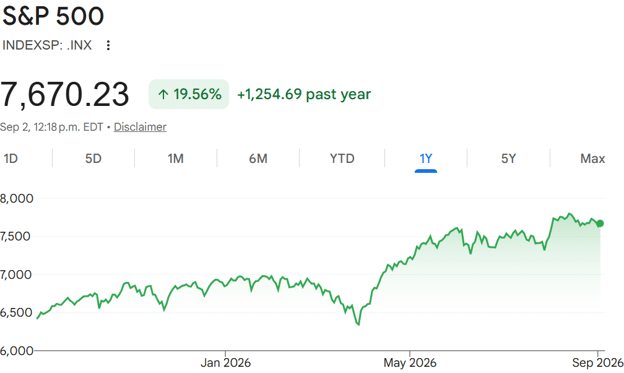
The one-year S&P 500 chart courtesy Google. Spending more than a minute or two talking about this is obscene. This isn’t a recommendation and you can’t invest directly in this index. Disclosures here.
We started what we call ‘surge season’ this week. From September until mid-December, we’re going to try to meet with every single client to confirm things are as they should be on the financial front. It’s a lot of work but it’s our job. And we do it this way because it forces us to maintain our standards. I hate to say it, but pressure leads to positive outcomes. Coal to diamonds, or something like that.
We don’t call these meetings ‘annual reviews’ because we spend little time reviewing what’s happened. We’re not going to talk about the year that was, nor are we going to ramble on about how the economy is doing. The only thing we’ll talk about in the past tense is how your investments have performed net of fees and why. The rest of what we discuss has to do with your present and future cash flow and all the things that affect it.
That’s why we title these meetings ‘as it should be.’ They’re forward looking and they’re about you and what’s important to you. They aren’t a showcase of how smart we are (because we’re not that smart).
Here’s a sample agenda. The real ones are customized per client.
- Any questions, comments, thoughts, concerns, or anything top of mind to discuss?
- Reaffirm of what’s important.
- Any changes since our last contact?
- Any large upcoming expenses (within one to three years) that might require freeing up capital from your investments?
- Updates re. your cash flow, net worth, taxes, estate plans, and insurance policies.
- Put plans in place re. your future cash flow and net worth, and how it may affect tax and estate plans in the future.
- Estimate future income.
- Talk about risk. It’s not volatility.
- Reaffirm our investment process (i.e., sell only if you need income/a lump sum within one to three years and the market isn’t getting obliterated). Investments are tools. They aren’t plans.
- Itemize everything we’ll need to bug you about over the next twelve months to keep you on track, until we have this meeting again next year.
That’s it. We spend no time talking about what happened in the market over the past twelve months. And we don’t have to talk about your investments for more than a minute because the money we have earmarked for income/expenses earns pathetic interest or acts as ballast (i.e., deadweight). We know it’s there for a reason, and we know not to expect much in terms of returns from that part of your account.
The money that’s invested for the long-term is in two investment funds. They're both globally diversified and low cost. One is more volatile than the other (and on purpose). These holdings are where we expect the growth in your accounts to come from. And every so often they’ll do the exact opposite of grow. But that’s the point.
Our job is to carry out the financial planning process over and over and over again. If the annual review meeting you’re sitting in involves more than a minute or two talking about investments—which are a minuscule part of the financial planning process—then what are you doing? Looking in the rearview mirror isn’t going to help with what comes next. It’s a waste of time because you can’t go back in time.
Make sure things are as they should be each year. Set financial goals, put a checklist in place, and work hard to get it done. Don’t wish you had done something different in the past. Put and end to these annual reviews.