

Transparency
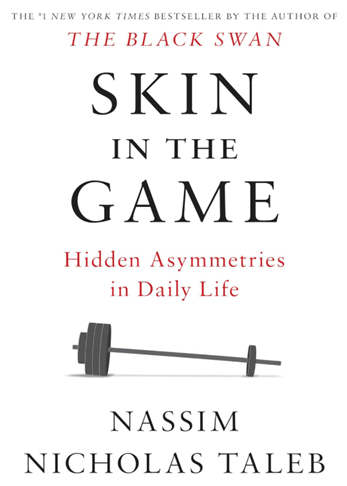
Whenever someone asks me what I think – about an investment idea, the global economy, interest rates – I always think of what Nassim Taleb said in his book, Skin in the Game:
Don’t tell me what you think, tell me what you have in your portfolio.
That’s why I try my utmost to have every last one of the families I help invest the same way I do. There are some families that don’t want to. And that’s perfectly fine. I’ve written before that everything works, some things work better than others, and the best investment portfolio is the one that stays invested.
There are rules I abide by no matter what, though. Diversification is paramount, keeping costs low is vital, and money needed within two to three years should not be invested.
Something that puzzles me is why, according to reddit and YouTube comments (yes, I waste my time there – I’m human), some financial content creators are implicitly trusted by the comments section.
I’ll use Ben Felix and PWL Capital as examples here because I value the content they put out, even if it is a bit (a lot) wonkish sometimes. They are transparent. Though I don’t know exactly what their fees are (here are ours), I know how they build portfolios, I know how they conduct the financial planning process, and I know I can find most of what I’d like to know about how they run their business on their website or podcast or YouTube channel. Transparency is valuable. And I wish the profession at large accepted this.
Since transparency is so important, I’m going to share exactly how I invest my own money (how we allocate our clients’ funds too), what content I read or listen to regularly, and if I’d work with a financial advisor if I wasn’t one.
My personal investment portfolio is made up of two funds. And, as always, this isn’t investment advice. You need to consider your own situation, objectives, risk tolerance, time horizon, and liquidity need before investing. I hate that I always have to repeat that.
- ~80% is in the Dimensional Global Equity Fund (DFA607 if fee-based, DFA606 if not)
- I’m able to access these funds in Canada because I’m a licensed financial advisor. If you’re a DIYer, the CAGE ETF is close to comparable.
- ~20% is in the Vanguard Global Momentum Fund (VMO)
The reason I prefer those two funds is because they’re global, they’re diversified, they’re low-cost, and they allocate to the big five risk premiums (the market, small companies, valuable companies, profitable companies, and momentum – more on them in a future post).
When I get closer to retirement (decades away), I’ll add two or three years’ worth of money market funds and short-duration bond funds to my portfolio strictly to lower sequence of returns risk.
I hate bonds, so I’ll keep avoiding them. If clients need a bond allocation given their tolerance for volatility/risk, I’ll add an inexpensive, diversified, investment-grade bond fund to their portfolio. But I’ll try my best to articulate that to me, bonds are terrible long-term investments. And that volatility should be embraced, not avoided.
Investing is a simple part (I didn’t say easy) of the financial planning process. What I read and listen to shapes what I think.
I try hard to avoid current events. They don’t help at all. I don’t care about current events. I care about how clients might react to them. Still, some of the content I read and listen to covers a lot of it quickly so that I don’t have to.
Here’s a list (links included in the footnotes).
- I read This Day in History first thing every morning.
- Nick Murray’s books and monthly newsletter are my bible.
- Mark Meldrum helped me get through the CFA program, so I listen to his weekly market update on YouTube (though I often skip big parts of it). His insights are valuable.
- I subscribe to The Compound YouTube channel for finance news with a Long Island and/or Michiganian accent.
- I also subscribe to Ben Felix’s YouTube channel and The Rational Reminder podcast. I said they were wonkish, so I listen to the podcast at 2.5x speed.
- I read and listen to everything Michael Kitces puts out. Even though it’s heavily tilted towards American advisors, I learn a lot about how to be a better wealth manager from him and his team.
- Ben Carlson and Barry Ritholtz’s blogs are the only two I check daily.
- I think Derek Thompson is one of the best journalists in the world. He knows his biases, but he approaches things from every angle. I learn a lot from his Substack and podcast.
- Founders podcast by David Senra reminds me that investments are businesses not numbers on a screen. He does one hell of a job articulating how the founders of businesses run things.
- Finally, I read (and often re-read) every one of Jared Dillian’s Substack essays.
Now for the last thing. Would I hire an advisor if I wasn’t one? And please ignore the clear conflict of interest and counterfactual.
I strongly believe that one of the most important parts of my job is to provide impartial advice. It’s why I have an accountant (even though I think I could do my own taxes) and it’s why I went to a lawyer to get my estate documents completed. I think I know what to do, but I don’t know if what I think I know is correct.
Alternatively, I think that with enough YouTube instruction, reading, and hard work I could be an amateur plumber, electrician, and carpenter. But my time has value. An electrician can probably fix a minor electrical problem in an hour, but it would take me days, and I’d still screw it up somehow. And don’t get me started on major problems or projects.
I value expertise, and that’s why I’ll hire someone to give me financial planning and investment management advice before I retire.
I rant and rave about keeping things simple. It’s why simplicity is one of HWM’s guiding principles. But simplicity comes through mastery. I am by no means a master. But I’m trying.