

Pessimists (Part I)
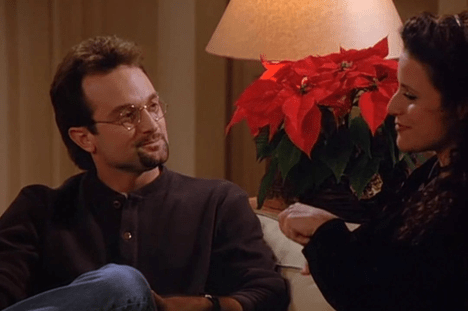
Ned Isakoff, the communist Elaine dated in Seinfeld (S6E11), who famously said he’s “got some literature in my car that will change your whole way of thinking!”
I share Morgan Housel’s post, “The Seduction of Pessimism,” with just about everyone I know. Even though it’s nine years old now, I’m still sending it to people once or twice a week. It’s timeless. What makes it so good for sharing is that the reader only needs to make it through three paragraphs to get the point. But if three paragraphs are too much for you, here’s a two-sentence summary:
Pessimists sound like intellectuals and optimists sound like salespeople. And people would rather feel smart than be sold something.
I used to eat up every word from the pessimists. The ones that called the Great Financial Crisis were my heroes. And if they stayed pessimistic, they had my undivided attention. I read everything I could get my hands on so long as it had to do with the world going to hell. And I felt so smart reading it.
That didn't translate into doing well at my job, though. Nobody wants to invest their life savings with someone who lectures them about hyperinflation, governments going bankrupt, and the next big crisis (what the hell was I thinking?).
I abruptly changed my tune in May of 2013 after a mentor handed me a book with a gold tree on the cover called Simple Wealth Inevitable Wealth (SWIW). He told me I could read it in a sitting. I read it once, then I read it again, and by Sunday night I had read it four times. “Buy stocks, hold onto them no matter what, and be quiet” was the message in SWIW. I was starting to see the light.
Then on May 8th an old colleague – the guy who told me to buy bank stocks in 2010 – forwarded me a blog post titled “Optimism as a Default Setting.” This sentence screamed at me: “You think this period is more frightening than the sixteen-month recession between July 1981 and November 1982 only because you weren’t there and you haven’t studied history.” The bold is mine. I study a lot of history and that one phrase changed everything. You learn a lot if you put yourself in the shoes of people at a point in time realizing they had no idea what came next.[i]
I was converted to a default optimist in a week, and all it took was a book and a blog post. Quite the epiphany, I know. Who knew all it took was a bit of literature? Communists in the 50s, with literature and pamphlets piling out of their trunks, would have loved me.
I’m an optimist and I always will be. Why bother investing in the future if the world’s ending? There is a lot to be concerned about right now. The list is exhaustive and the headlines are worse. But we humans will find a way around it (or through it). We always have.
But throughout history there’s always been a ton to be concerned with. The barbarians are always outside the gates.
Tomorrow I’m going to tell you about how the pessimists got my attention again. And that even though they have my attention, I’m not going to change my thought process.
[i]Seriously, find a history book that was published in the mid-90s and never updated. Then compare it to one published today. The events are the same, but how those events are described is a lot different because the older book doesn’t have the extra thirty years of history to draw on.