

Confirmation Bias at the Fed
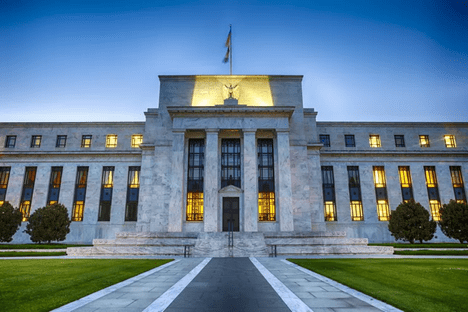
The Federal Reserve Building in downtown Washington DC, USA at night.
Credit: traveler1116 / Getty image via Investopedia
Kevin Warsh, the new head of the Federal Reserve (the Fed), announced the creation of five task forces last week. And nothing says, “I’m damn serious about my job,” like putting together five task forces.
Here’s the important part of the press release.
The five task forces will examine areas central to the broad conduct of monetary policy. They will be co-led by external advisers—accomplished economists, business leaders, and former central bank practitioners—with deep expertise in their fields. Supported by Federal Reserve staff, they will operate independently, with a mandate to follow the evidence, provide candid feedback, and produce rigorous findings for the Federal Open Market Committee.
The task forces are powerless. They exist strictly to provide advice and guidance to the decision makers, and, ultimately, Warsh.
I will forever be a Fed skeptic. Blame it on the formative years of my career when Ben Bernanke, the Fed Chair during the Great Financial Crisis, tossed everything at saving and then rebuilding the banking sector.
Bernanke’s responsible for Quantitative Easing, Operation Twist, the introduction of quarterly Summaries of Economic Projections (SEPs), the Dot Plot, and Fed balance sheet projections. He also encouraged Fed officials to communicate as often as possible. He wanted them everywhere all the time with microphone in hand. He himself was interviewed on 60 Minutes twice.
Bernanke institutionalized Fed transparency. And for better or worse he elevated the Fed Chair position to celebrity status.
It sounds like Warsh wants to rein in a lot of what Bernanke introduced. And the people he’s appointed to the task forces confirms it.
Warsh’s five task forces are made up of his friends. There’s no other way to say it. If what I’ve learned from WarshGPT (with thanks to the people at F/m Investments) is true, they were appointed to confirm his beliefs. It’s confirmation bias writ large. That’s politics today, isn’t it?
Here’s a summary of the five task forces and how I think they’ll confirm Warsh’s biases.
Communications. Forward guidance, like the SEPs and the Dot Plot, is a joke. No one can predict the future, not even central bankers. And Fed governors waxing poetic at business clubs across America do nothing for markets.
Stop talking. Do your job. Build a framework and react to it. That’s what all three experts (and Warsh) want.
I hope we don’t see him on 60 Minutes.
Balance Sheet. The only thing this task force agrees on is that mortgage-backed securities (MBSs) shouldn’t be on the Fed’s balance sheet. They don’t agree on much else. If the MBS run-off continues it’ll be a win for Warsh, otherwise it’ll probably be business as usual (keep on buying government debt).
The bigger question is whether he continues to provide balance sheet projections.
Maintain balance sheet transparency, please. But end the projections.
Data. Focus on real data and not survey data. Walmart and Amazon have better data than the surveys and questionnaires the Fed sends to businesses and consumers. Realtime data is abundant. They want to use it and they should. I hope they will.
Data aggregation has always been a strength of the Fed. But they need better data and Warsh knows where to get it, which is exactly the point.
Productivity and Jobs. Unfortunately, all three experts in this task force are prophets who believe that LLMs (not AI!) will increase productivity, which should decrease prices, and, as a result, allow for lower interest rates (and inflation).
This is forecasting. If the SEP and Dot Plots are no longer necessary, then neither is this task force.
Inflation Framework. The experts want Flexible Average Inflation Targeting (FAIT) to be a thing of the past. And thank goodness for that. It was introduced in August of 2020. The Fed has a target of a two percent inflation target (introduced by Bernanke), and the FAIT policy means if inflation runs at one percent for two years and then three percent for two years, it’s no issue because the average is two percent.
Though they’ll never admit it, one of the reasons the Fed was late in attacking inflation in 2022 was because of FAIT.
Getting rid of it might result in less volatile inflation going forward.
I don’t know if any of these task forces will change what Warsh already wants to do. But they’re good for optics. Let’s see if Warsh and his friends can change the way the Fed is viewed by Wall Street and the public.