

It’s not called an investment reaction
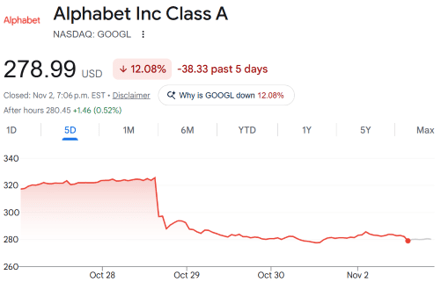
Alphabet’s drop on Friday made a few headlines and resulted in a lot of ‘what ifs.’
What do investors do if the midterms go a certain way? What happens if interest rates rise or fall? What changes should be made to investment accounts if the AI boom turns into a bust? What if anything ever happens?
Those questions are meaningless and useless to serious and long-term investors. A solid investment plan focuses on how to behave when, not if, bad times inevitably arrive. Because when your investments get hammered—and they will—all you have to do is stick to your investment plan. It’s tough and it’s simple, and it works.
Rules of thumb in personal finance are irksome because no two people are the same. But there are iron laws that should be obeyed when it comes to a solid investment plan. Here they are:
Money you require within three years should not be invested in equities. If the $100,000 you know you’ll need next year goes up by 30% it will feel OK and your brain will tell you it was expected all along (despite how rare it is), and then you’ll feel entitled to it. But if that $100,000 drops by 30% (not so rare) the pain will be unbearable. Losing money feels twice as bad as making money feels good. Don’t subject yourself to that feeling.
Always diversify. Individual stocks aren’t worth it (see here, here, and here), and you’re dreaming if you think you’re going to luck out and buy the next big stock and then never sell it. If you’re appropriately diversified, it means you always hate something in your investment account. But if you’d rather not hate something in your investment account, and your tolerance and time horizon allow it, buy a single, global index fund like XEQT, CAGE, or DFA607.*
Accept that bad markets are necessary and unpredictable. You can’t have your cake and eat it too. Market timing is a fancy way of saying, ‘I can take part in the good and avoid all the bad.’ No, you can’t. If you want the long-term returns the market provides, you need to take heavy punches from it from time to time too.
Equities are stocks and stocks are companies. Companies make necessary adjustments in bad times. They lay off workers, sell off divisions or brands, and manage their books prudently. Companies do not have an obligation to lose money indefinitely. But diversification allows investors to participate in the adaptability and profitability of businesses collectively, without having to pick potential winners or losers. Good companies look at bad times as opportunists. Not as victims.
Investment plans should only change when your personal circumstances change. It’s called an investment plan for a reason. It’s not called an investment reaction. It’s not an if then else computer program. It’s something you put together to fulfill your long-term goals. Only bad investors let current events dictate their investment plan.
*Those aren’t suggestions, only examples. See disclosures here.