

The appeal of beaten-up stocks
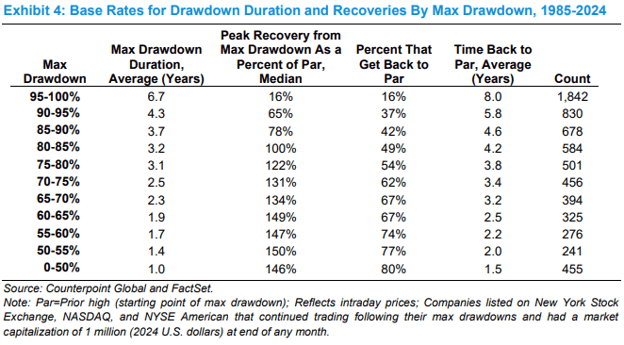
Table courtesy Michael Mauboussin’s research.
See important disclosures below.
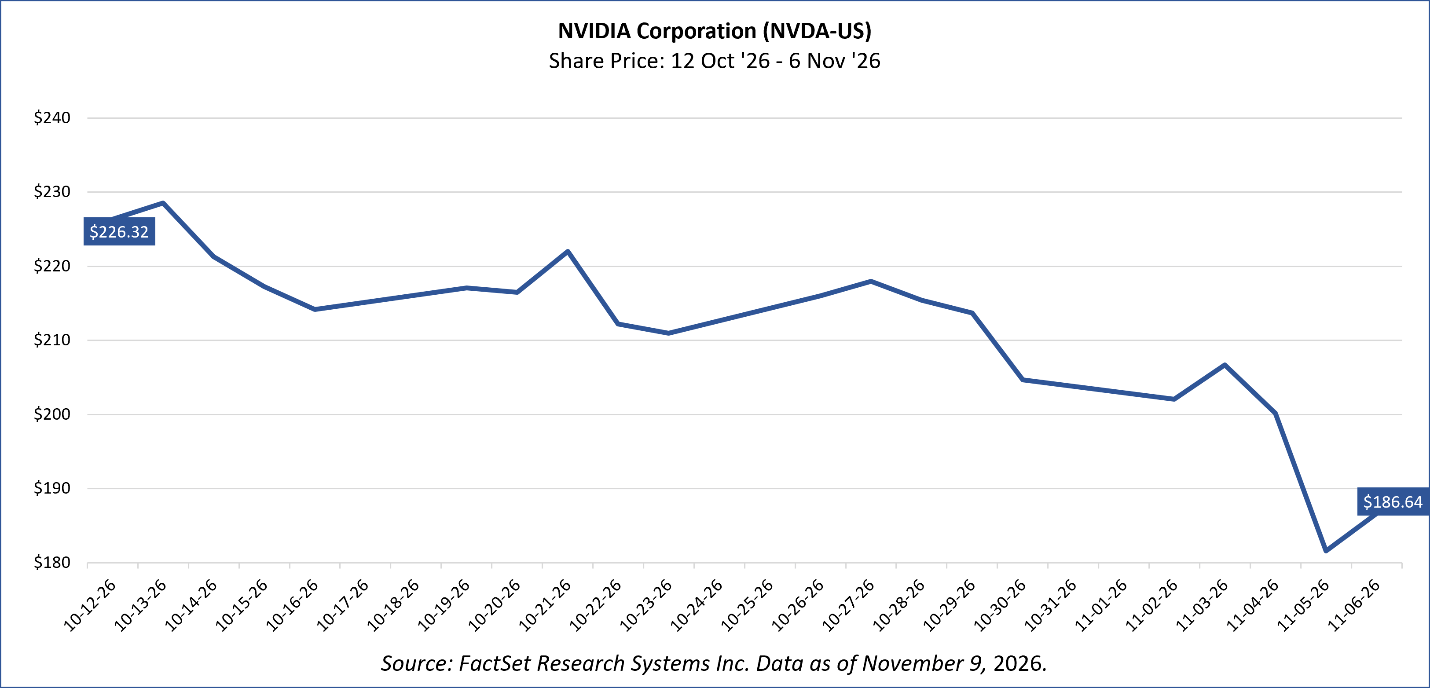
Here are the one-month returns of three popular stocks. They aren’t pretty.
Nvidia is down almost 20% (I’m writing this on Monday before the market has opened. News of Jensen Huang’s alleged affair with a suspected Chinese spy made headlines last night. The stock is down about 5% in the pre-market, which is why I use Friday’s closing price below).
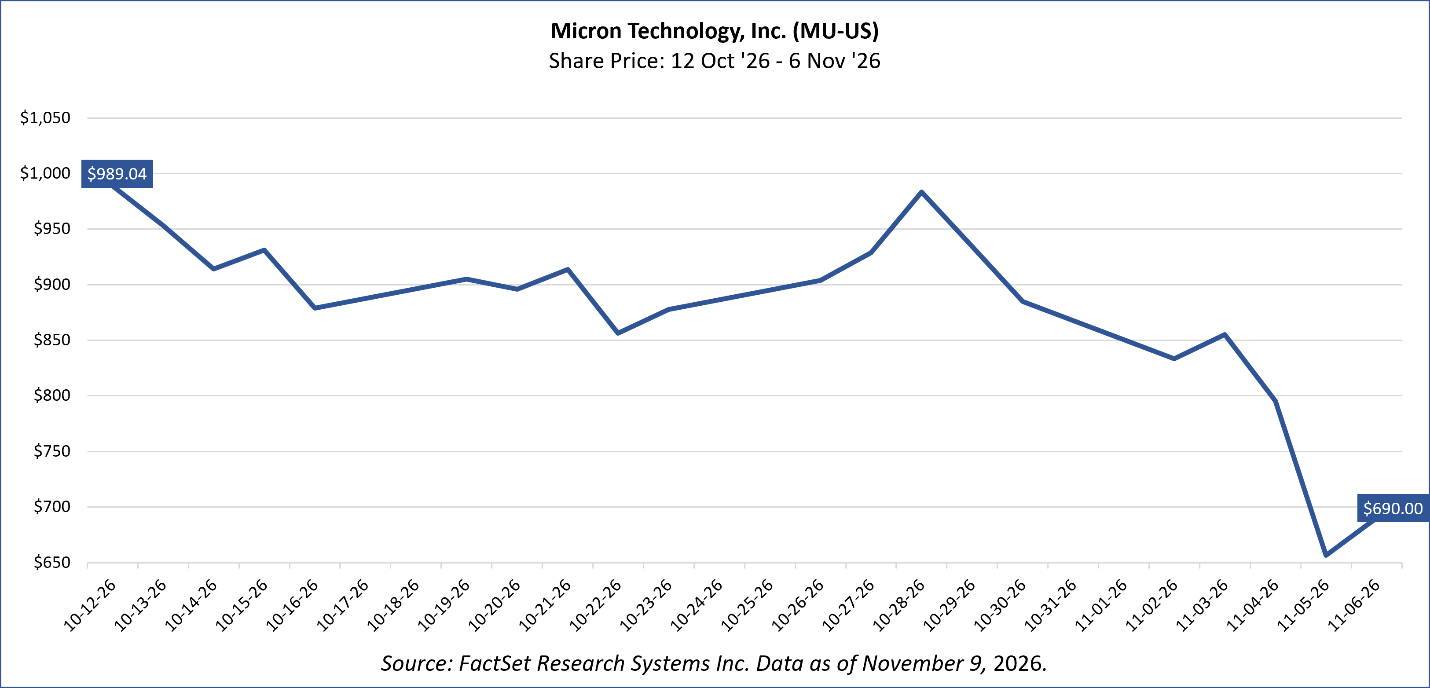
Micron is down just over a third.
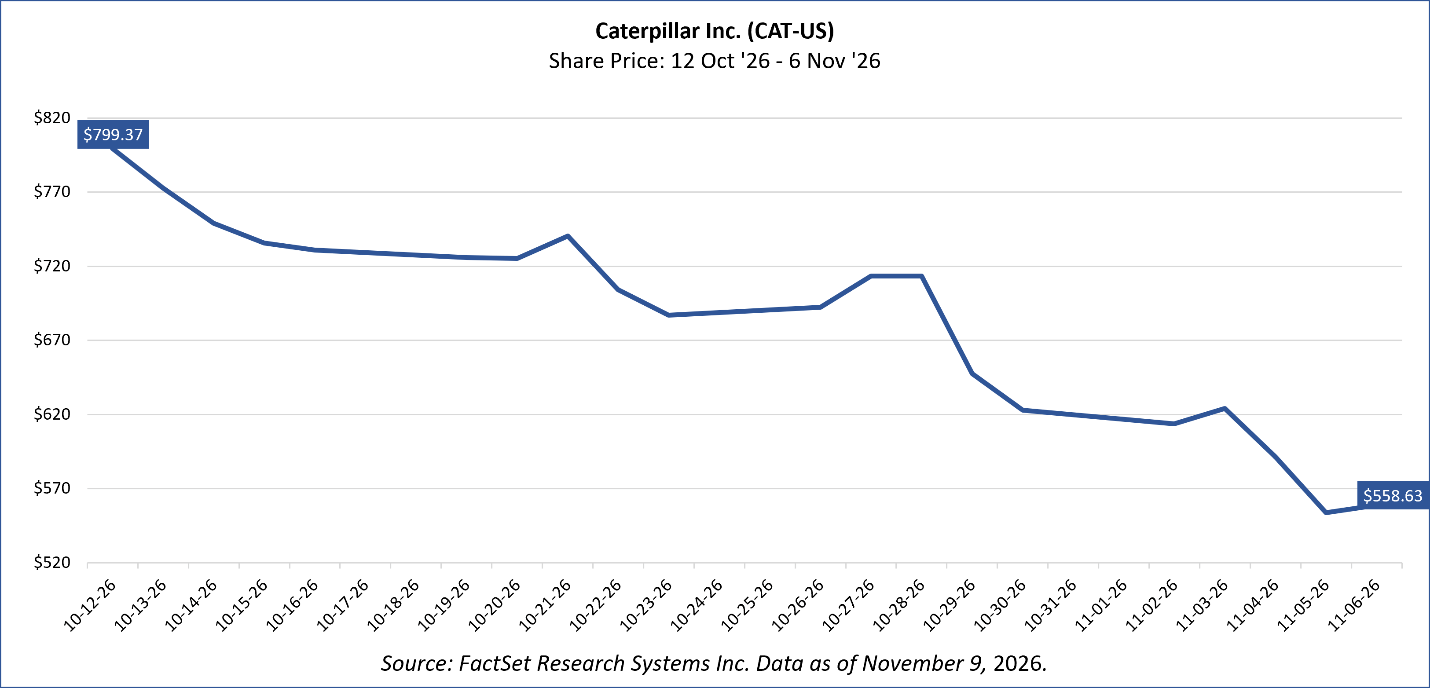
Caterpillar is down about the same.
If you bought Nvidia at Friday’s close and it recovered to where it was a month ago, you’d be looking at a 25% return if it took a year. About 11.8% if it took two. And about 7.7% if it took three.
With Micron and Caterpillar, you’d be looking at close to 50% in a year, 22.5% in two, and around 14.5% in three. Heck, you’d be looking at almost 11% after four years.
The arithmetic of their potential recovery is seductive, and it's easy to see the appeal in wanting to make those trades. But the arithmetic tells us nothing about the likelihood of that recovery. Who doesn’t want a potential 14.5% annualized return over three years?
And truth be told, for a brief minute—just a second, I swear—I even thought, “why not buy some Caterpillar? If it takes four years to recover I’m still looking at 11%/year.”
But those simple numbers rely on the assumption that Nvidia, Micron, and Caterpillar’s share prices inevitably recover. And there’s zero guarantee of that happening.
Michael Mauboussin studied roughly 6,500 stocks over 40 years and found that about 54% didn’t recover their prior peaks during the period studied. The median maximum drawdown was 85%, far worse than the declines noted above. But that’s the point. Not a single soul knows whether a 34% drop is a routine pullback or the first leg of something a lot worse.
And Hendrik Bessembinder’s research, which I reference often, helps explain why recovery is far from guaranteed. Most of the wealth created in the stock market over the last century came from a tiny fraction of stocks, and the rest, taken together, did no better than Treasury bills.
A potential 14.5% annualized return over three years is only on the table if you’re right about which stock you own, and no one can tell you that in advance. “But this is Nvidia we’re talking about!” Please see: GE, AIG, Kodak, Xerox, IBM, AT&T, BlackBerry, Sears, Palm, MapQuest, Enron, Lehman Brothers, TiVo, Nortel.
Capitalism isn’t for the faint of heart. The S&P 500 has a long-term historical return of about 10%. No one knows if that will continue, but it’s all we have. If Caterpillar takes ten years to recover, you’re looking at just shy of a 4.25% return per year (I know it pays dividends but those aren’t guaranteed). That’s about what you’d get from a GIC.
Don’t be tempted by individual stocks. Their siren song can be seductive. It’s why Odysseus had himself tied to the mast and had his crew jam wax in their ears.
This post is for general information and education only. It is not investment advice or a recommendation to buy, sell, or hold any security. Nvidia, Micron, and Caterpillar are mentioned for illustration only. Return figures are hypothetical calculations, not forecasts or predictions, and actual results may differ materially. Past performance is not indicative of future results. The views expressed are mine and not necessarily those of Raymond James Ltd. Speak with a qualified advisor about your own situation before making any investment decision. See additional disclosures here.